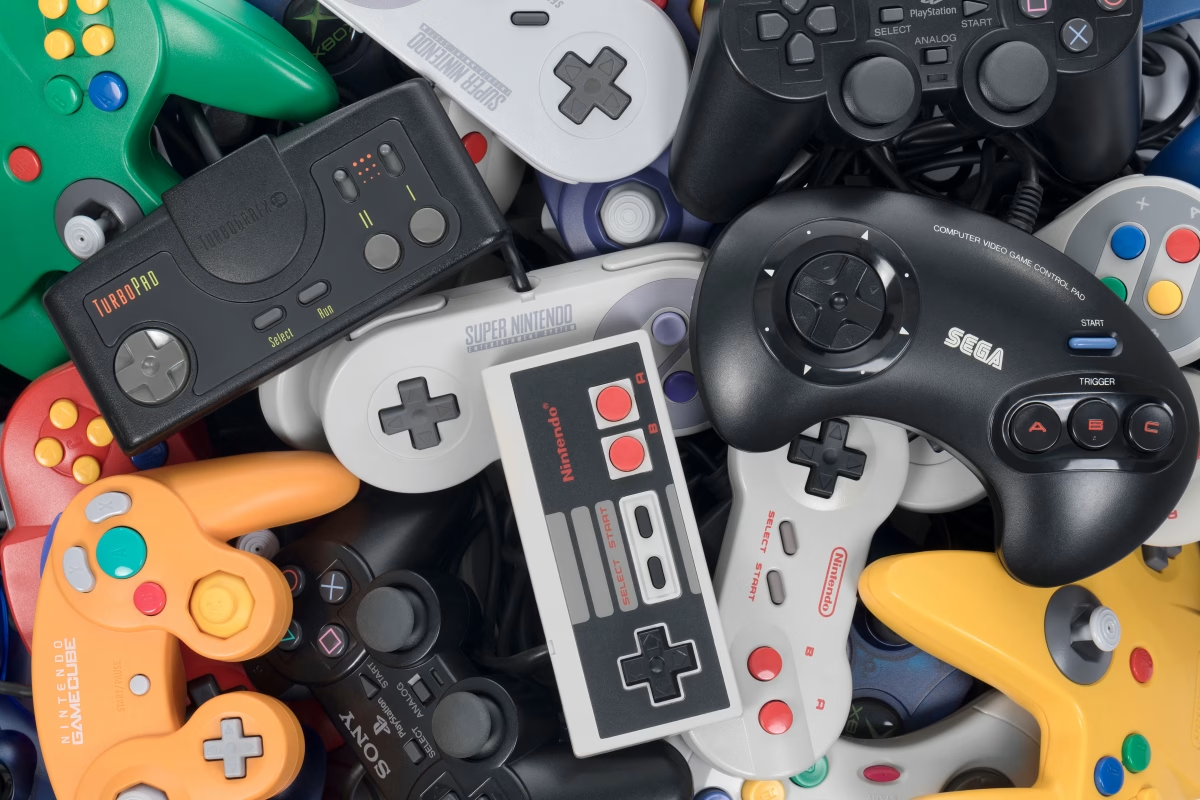
Emulation has long been a hot topic in gaming, with passionate arguments on both sides of the debate. While emulators have made it possible to preserve and play classic games across modern devices, they also raise legal and ethical concerns. The question many gamers ask is: are emulators legal? This article will dive into the legal status of emulation, how it varies by country, and the rights of game developers and players alike.
The Rise of Emulation in Modern Gaming
Over the past two decades, the gaming industry has seen a growing interest in retro gaming. Players from different generations want to experience classic titles, whether for nostalgia or to explore the roots of gaming history. As a result, emulators have surged in popularity, providing users with an avenue to play older games on modern systems.
Several factors have contributed to the rise of emulation:
- Scarcity of Original Hardware: Many classic gaming consoles are no longer in production, making them difficult and expensive to acquire.
- Preservation of Gaming History: Some games have never been re-released, leading to concerns that they could be lost to time.
- Customization and Convenience: Emulators often enhance the gaming experience with graphical improvements, save states, and controller remapping.
- Homebrew and Indie Development: Developers use emulation to create and test new software for classic systems, extending the life of retro gaming.
While these advantages have made emulation an integral part of gaming culture, they also come with significant legal considerations.
Are Emulators Legal Under Copyright Law?
In general, the creation and distribution of emulators themselves are legal in most countries. Emulators do not contain copyrighted game data and are simply programs that mimic the hardware of a console. However, the legality of emulation changes when discussing game ROMs.
A game ROM is a copy of a game’s software extracted from the original cartridge or disc. The issue arises when ROMs are shared, downloaded, or distributed without permission from copyright holders. This is where legal concerns become more significant.
U.S. Copyright Law and Emulators
Under the Digital Millennium Copyright Act (DMCA), creating an emulator does not violate copyright laws, provided it does not include proprietary BIOS files or software owned by a console manufacturer. However, downloading or distributing ROMs of commercial games without authorization is illegal.
Some key legal considerations include:
- BIOS Files: Some emulators require proprietary BIOS files to function. If a BIOS file is copyrighted, using it without permission can violate intellectual property laws.
- Fair Use: Some argue that backing up games you own qualifies as fair use. However, this has never been explicitly upheld in court regarding ROM distribution.
- Personal Backups: Making a personal backup of a game you own might be legally defensible, but distributing that backup is not.
International Laws on Emulation
Different countries have different stances on emulation:
- Japan: Strict copyright laws make the use of ROMs without permission illegal. In 2018, Japan introduced new regulations specifically criminalizing the unauthorized distribution of ROMs.
- European Union: Many EU countries have copyright exceptions for personal backups, but these laws do not extend to downloading ROMs from third-party sources.
- Canada: Canadian copyright law allows for format shifting (copying media to another format) but does not permit ROM distribution.
- Australia: The country has strict anti-piracy laws that make distributing and downloading ROMs illegal.
While emulators themselves are typically legal, the use of copyrighted game files without the consent of the rights holders can lead to legal consequences.
Notable Court Cases and Legal Precedents
Several major court cases have influenced the legality of emulators and ROMs:
- Sony Computer Entertainment v. Connectix (2000): Sony sued Connectix over its PlayStation emulator, but the court ruled in favor of Connectix, stating that reverse engineering for compatibility was legal.
- Sony v. Bleem! (2001): A similar case where Sony sued Bleem! for creating a PlayStation emulator. The court ruled in favor of Bleem!, reinforcing the legality of emulation.
- Nintendo v. LoveROMs (2018): Nintendo sued the owners of LoveROMs and LoveRetro, websites hosting thousands of ROMs. The case resulted in a $12 million settlement, highlighting the illegality of ROM distribution.
These cases show that while emulators themselves are often legally protected, distributing ROMs is far more likely to result in legal consequences.
How to Use Emulators Legally
For gamers who want to stay within legal boundaries, there are ways to enjoy emulation without breaking copyright laws:
- Use Open-Source Emulators: Emulators like RetroArch, Dolphin, and PCSX2 are legally developed and do not contain copyrighted code.
- Dump Your Own ROMs: If you own a physical copy of a game, you may be able to legally extract a ROM using specialized hardware.
- Purchase Legal Digital Copies: Some platforms offer legal downloads of retro games, such as Nintendo Switch Online, PlayStation Store, or GOG.
- Support Licensed Retro Consoles: Companies like Analogue and Hyperkin produce legal hardware alternatives for playing classic games.
The Future of Emulation and Game Preservation
As technology advances, the role of emulation in game preservation becomes even more critical. Many games from the 1980s, 1990s, and early 2000s are at risk of being lost forever due to hardware deterioration and discontinued software distribution. While some companies actively preserve their libraries, many classic titles remain unavailable through legal channels.
Game preservation organizations argue that emulation is essential for maintaining gaming history, especially for educational and archival purposes. Some developers and publishers have even embraced emulation as a legal way to re-release their older titles, making it easier for gamers to access classic content without resorting to piracy.
Conclusion
So, are emulators legal? The short answer is yes—emulators themselves are legal in most countries, as they do not contain copyrighted game files. However, the use of game ROMs without permission from the rights holder is generally illegal. As laws vary by country, it’s essential for gamers to understand their local regulations before using emulators.
With game preservation becoming more important, the future of emulation may depend on collaboration between developers, preservationists, and lawmakers. For now, gamers looking to experience classic titles legally should explore options like official re-releases, legal ROM extraction, and open-source emulators that respect copyright laws.